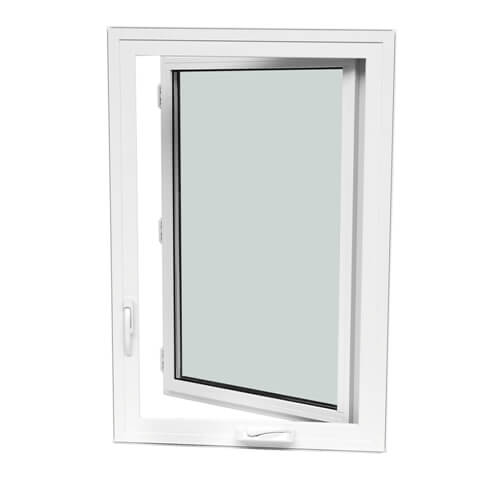
When replacing older, drafty windows in the Greater Toronto Area, homeowners almost always find themselves weighing two standout operational styles: Casement Windows and Horizontal Slider Windows.
Both styles are manufactured using premium 100% virgin uPVC vinyl, multi-chambered thermal extrusions, and high-performance Low-E insulated glass. However, their physical operating mechanisms create fundamental differences in airtightness, natural ventilation, sightlines, and daily usability.
Below is our comprehensive, side-by-side comparison to help you choose the ideal window style for every room in your home.
1. Energy Efficiency & Airtightness
In Ontario’s climate—where temperatures fluctuate from -25°C winter blizzards to +35°C humid summer heatwaves—thermal seal performance is the single most critical factor in window selection.
How Casement Windows Seal
- The Compression Seal Advantage: Casement windows operate on heavy-duty stainless steel scissor hinges that swing outward like a door. When you close the multi-point cam lock lever, the sash is pulled directly into the frame, compressing continuous dual rubber EPDM gaskets on all four sides.
- Wind Resistance: When harsh winter gusts blow against a casement window, the external air pressure pushes the sash tighter against the frame, further reinforcing the seal.
- Energy Ratings: Typically achieve the highest Energy Ratings (ER 34 to 42) and lowest U-Factors (down to 1.14 W/m²·K in triple-pane configurations).
How Slider Windows Seal
- Weatherstripping Sweeps: Slider windows glide horizontally along low-friction brass roller tracks. Because the sashes must slide smoothly past one another, they rely on flexible high-density brush sweeps rather than direct compression gaskets.
- Winter Wind Infiltration: High winds can sometimes create slight micro-gaps along the interlocking meeting rail sweeps compared to the hermetic clamp of a casement.
- Energy Ratings: Premium multi-fin weatherstripped sliders easily achieve Energy Star Zone 2 compliance (ER 34+), but fall slightly behind casements in absolute airtightness.
Verdict for Energy Savings: If maximizing heating bill reduction on windy exterior elevations (north and west-facing walls) is your top goal, Casement Windows take the win.
2. Airflow & Natural Ventilation
How a window opens dictates how effectively it captures outdoor fresh air and cools your home during spring and autumn.
Casement Airflow Dynamics
- The “Sail” Effect: Casement sashes crank open up to a full 90-degree angle. The opened sash functions like the sail of a sailboat, catching breezes blowing parallel to your house and channeling them straight indoors.
- 100% Ventilation Area: The entire window opening allows air passage from top to bottom.
Slider Airflow Dynamics
- 50% Maximum Open Area: Because one sash slides over the other, a standard two-lite slider window can only ever open up to 50% of the total rough opening width.
- Linear Airflow: Requires breezes to hit the window face directly to enter efficiently.
Verdict for Ventilation: Casement Windows provide roughly double the effective airflow volume and capture side breezes that sliders miss completely.
3. Usability, Ergonomics & Exterior Clearance
The surrounding physical environment of the window determines which style functions best day-to-day.
When Slider Windows Are Superior
- Exterior Walkway & Deck Clearance: Because slider windows open strictly within their own frame tracks, the sash never protrudes into outdoor spaces. This makes sliders the mandatory choice above outdoor patios, narrow side walkways, wrap-around decks, or beside driveway paths where an outward-projecting sash would pose a hazard.
- Fingertip Glide Operation: High-quality sliders glide horizontally with a gentle push, making them effortless for children, seniors, or individuals with limited wrist mobility who struggle with winding crank handles.
- Oversized Horizontal Openings: Sliders are naturally suited for wide, low openings (e.g., 60 inches to 96 inches wide) where tall casement sashes would be structurally unfeasible.
When Casement Windows Excel
- Hard-to-Reach Locations: Casement cranks are conveniently located at the bottom of the frame. You can easily reach across deep kitchen counters, laundry sinks, or broad bathtubs to turn the crank with one hand, whereas sliding a heavy horizontal sash across a deep counter can strain your lower back.
4. Cleaning & Long-Term Maintenance
Both styles are engineered for simple, indoor washability, but their cleaning mechanics differ:
- Casement Washability: Modern 90-degree washability hinges create a 4-inch gap between the sash and frame when fully cranked open. This allows you to reach your arm around the exterior of the glass from inside your home to clean both sides effortlessly.
- Slider Washability: Slider sashes feature push-button tilt latches that allow the sash to tilt into the room, or lift out entirely for safe countertop washing.
Head-to-Head Comparison Table
| Operational Factor | Casement Windows | Horizontal Slider Windows |
|---|---|---|
| Operating Mechanism | Heavy-duty Truth™ rotary crank & hinge | Low-friction brass tandem roller glide |
| Seal Type | Continuous 4-sided compression gasket | Multi-fin interlocking brush sweeps |
| Average Energy Rating (ER) | 36 – 44 (Maximum Efficiency) | 32 – 36 (Very High Efficiency) |
| Effective Open Area | 100% of rough opening | 50% of rough opening |
| Exterior Projection | Swings outward up to 90° | Zero exterior projection (Stays in frame) |
| Ideal Opening Shape | Taller than wide (Vertical orientation) | Wider than tall (Horizontal orientation) |
| Egress Suitability | Excellent for narrow bedroom openings | Excellent for broad, wide openings |
| Best Budget Value | Mid to premium price tier | Most cost-effective operable style |
Room-by-Room Style Recommendations
To achieve the best balance of comfort, safety, and architectural elegance, most GTA homeowners use a strategic combination of both styles across their floor plans:
Choose Casement Windows For:
- Master Bedrooms & Guest Rooms: For maximum soundproofing against neighborhood traffic and exceptional night ventilation.
- Above the Kitchen Sink: For effortless one-handed rotary cranking across deep granite countertops.
- Windward Walls (North/West Exposures): For maximum compression sealing during winter cold fronts.
- Living Room Flankers: Paired on either side of a large fixed Picture Window to create a panoramic view with operable fresh-air sides.
Choose Slider Windows For:
- Patios, Decks & Porches: Prevents open sashes from obstructing patio seating, BBQ grills, or foot traffic.
- Basement Bedrooms (Egress Windows): A slider provides the necessary wide horizontal clearance to satisfy Ontario Building Code bedroom fire escape requirements within limited foundation wall height.
- Children’s Playrooms & Secondary Bedrooms: Smooth, safe operation with no protruding cranks.
- Laundry & Utility Rooms: Practical, low-profile ventilation without extra hardware.
The Comfort Windows & Doors Guarantee
Regardless of which style you choose, all Comfort Windows & Doors units feature:
- 100% Virgin lead-free uPVC vinyl that will never yellow, crack, or peel.
- Fusion-welded sash and frame corners for impenetrable water barrier protection.
- Super Spacer® warm-edge non-metallic glass spacers that eliminate edge condensation.
- Window Wise™ certified master installation and lifetime transferable warranty coverage.
Need help deciding on the best window styles for your floor plan?
Schedule a free in-home consultation with our window specialists, or call 416-800-1365 to discuss your project today.