


Security film for windows: is it worth it for GTA homeowners?
In February, three masked men tried to smash through the window beside Riley Mulvihill’s front door in the middle of the night. The glass cracked but didn’t give. The film bonded to the back of it held the shards together long enough that the intruders gave up and ran. CBC News reported her story in April, and it’s been part of a lot of conversations across the GTA ever since.
What stopped them was a thin, transparent layer of polyester film applied to the inside of the glass — the kind of thing most homeowners have never heard of until they need it.
At Comfort Windows and Doors, we’ve fielded more questions about security film over the past month than we have in the previous two years combined. So the obvious question, and the one worth answering honestly: is it actually worth the money?
The short answer: for ground-floor windows and the glass beside or in entry doors, yes, for most GTA homes. For upper-floor bedroom windows, probably not. The longer answer is below.
What security film actually is
Security film is a clear polyester layer, usually between 8 mil and 14 mil thick (roughly the thickness of a credit card), bonded to the inside surface of your existing glass. Once installed, you can’t see it. The window looks the same. The view and the light are the same.
What changes is what happens when somebody hits the glass with a brick or a hammer. Without film, the pane shatters and falls inward in a few seconds. With film, the glass still cracks, but the shards stay bonded to the film and the opening stays closed. To get through, an intruder has to keep striking the same spot, repeatedly and loudly, while the film slowly tears.
Julian Herzberg, the owner of Comfort Windows and Doors, used to do home security audits for Toronto Police as an auxiliary officer. He told CBC that the breakthrough time on a 14 mil film is about four to five minutes. “These guys that are trying to break into homes know they have a very limited time to get in and out,” he said. “They’re not going to spend that much time.”
That delay is the whole point. Most home invasions in the GTA right now aren’t planned heists — they’re fast smash-and-grabs looking for car keys and jewellery. Industry data consistently shows that most opportunistic intruders abandon the attempt in under a minute when the glass doesn’t give quickly.
When it makes sense
Security film earns its money on:
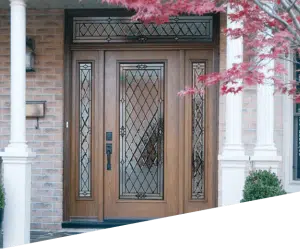
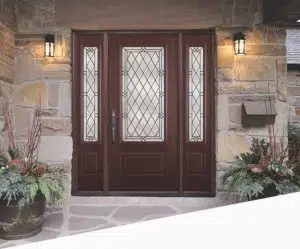
- The window beside or above an entry door, including sidelights and transoms
- Patio door glass, especially sliding doors
- Ground-floor windows facing the front, side, or rear yard
- Any window within reach of climbable structures: porch roofs, low garages, retaining walls
- Basement windows and large picture windows on the ground floor
When it doesn’t
Upstairs bedroom windows in a typical two-storey home are not realistic break-in points. Film doesn’t hurt anything there, but you’d be spending money to solve a problem you don’t have. The same applies to small windows nobody could fit through.
Security film also won’t do everything you might assume. It’s not bulletproof. It doesn’t make the window unbreakable — it makes the window slow to break. A determined intruder with time, tools, and no neighbours within earshot will eventually get through. The product is designed for the threat that actually exists in Vaughan and the rest of the GTA right now: opportunistic, time-pressured intruders.
What it costs
Pricing depends on the film grade, the size of each window, and how many windows you’re covering. A typical residential project at Comfort Windows and Doors runs from $500 to $4,500. A single entry-door sidelight sits at the lower end — subject to a minimum charge depending on distance. Covering every ground-floor window in a detached home pushes toward the upper end. Commercial-grade 14 mil costs more than 8 mil, but the breakthrough delay is also much longer — for the highest-risk windows in your home, the upgrade is usually worth it.
For comparison: replacing the glass after a break-in averages $500 to $1,500 per window, and that’s before whatever the intruders took and the cost of fixing the frame they damaged on the way in.
What to look for in an installer
A few things separate a good security film install from a poor one:
- The film is cut to fit each window precisely, with a small gap at the edge (about 1/16 of an inch) so it doesn’t lift over time
- It’s applied to the inside of the glass — outside-mounted film degrades in weather and won’t hold up
- The installer uses a wet application method and the right squeegee technique; bubbles and haze under the film are signs of a rushed job
- The film grade is matched to the window’s exposure and risk level, not sold as one thickness for everything in the house
- The warranty is in writing, both from the manufacturer and the installer
Ask whether the installer has done residential work specifically. Commercial storefront film is a different job in scale and finish quality.
So, worth it?
For homeowners in Vaughan, Richmond Hill, Markham, Thornhill, and the rest of the GTA living in detached or semi-detached houses with reachable ground-floor glass, security film is one of the highest-value home security upgrades available. It won’t stop a determined criminal. It will add enough delay to make your house a worse target than the next one. That calculation matters most right now, with home invasion attempts in Toronto still elevated above pre-pandemic levels.
If you’re protecting an apartment, a high-floor condo, or a house with no ground-floor glass at risk, you don’t need it.
If you’d like an honest look at where film makes sense for your home and where it doesn’t, we’re happy to walk through it with you. Comfort Windows and Doors has been installing windows, doors, and security film for GTA homeowners for 30 years. Julian’s background in home security audits means we’ll tell you what you actually need, not what we’d most like to sell.
Call us at (416) 800-1365, fill out the contact form on our website, or request a free quote — no pressure, no obligation.
